Budget Optimization for Digital Advertising Campaigns: A Complete Framework for Maximizing Every Dollar

Your advertising budget is shrinking.
But your goals aren't.
Marketing managers across industries face the same challenge: deliver better results with less money. The solution isn't working harder. It's working smarter with a systematic approach to budget optimization that can increase ROI by 40-60% without spending an additional cent.
Here's how.
Start With the 70-20-10 Rule
Most advertisers spread their budget evenly across platforms. This is a mistake.
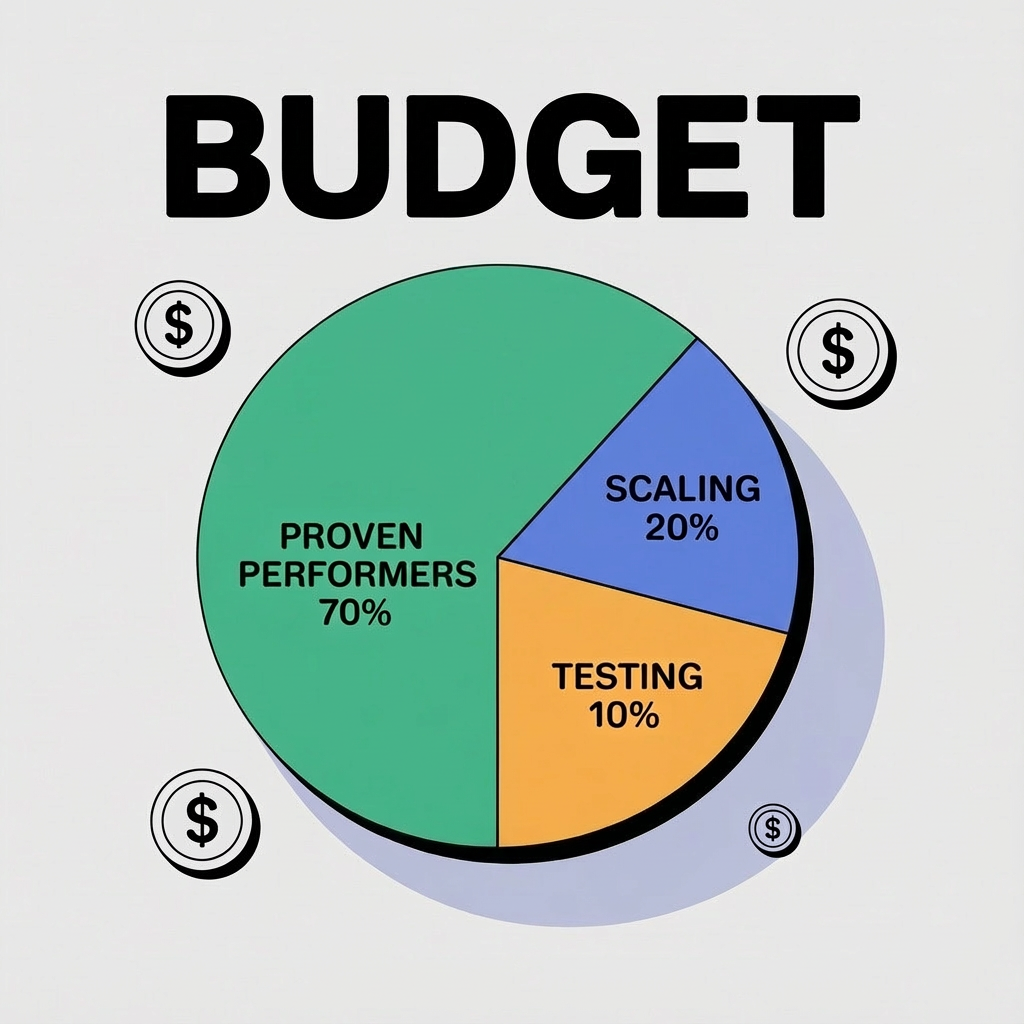
The 70-20-10 framework allocates 70% of your budget to proven performers, 20% to scaling opportunities, and 10% to testing new channels. This works because it protects your revenue base while creating room for growth.
Google Ads converting at $15 cost-per-acquisition? That gets 70%. Facebook showing promise at $22 CPA? That's your 20%. LinkedIn untested but targeting your ideal customer? Test it with 10%.
This allocation protects you from two common failures: over-investing in unproven channels and under-investing in what actually works.
Master Bid Strategy Selection
Your bid strategy determines how platforms spend your money. Choose wrong and you'll drain your budget in hours.
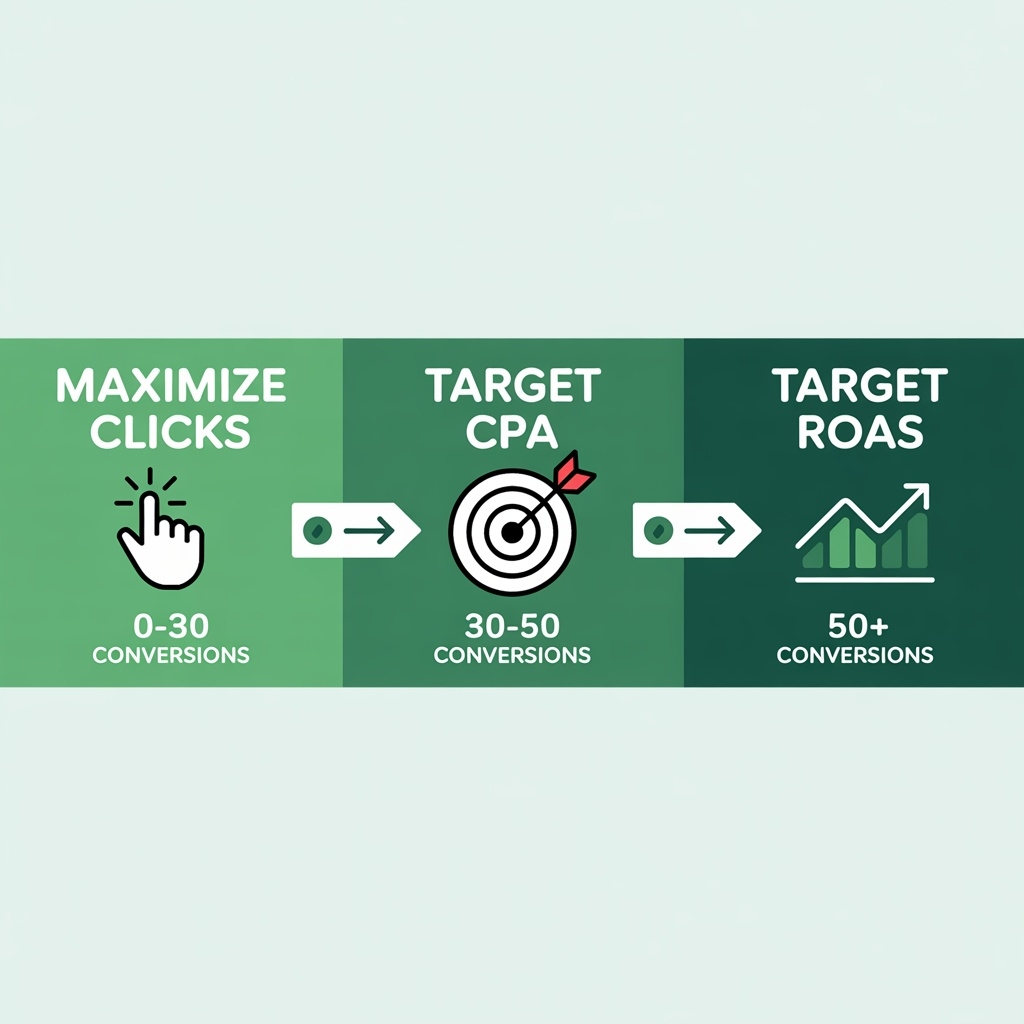
For awareness campaigns with limited data, use Maximize Clicks. This bid strategy gets you the most traffic for your budget, building the conversion data you need. Once you hit 30 conversions in 30 days, switch to Target CPA. This tells the algorithm your acceptable cost-per-acquisition and lets machine learning optimize toward that goal.
For established campaigns with 50+ monthly conversions, Target ROAS delivers the best results. It focuses spending on high-value conversions, not just volume. A campaign targeting 400% ROAS will prioritize customers likely to spend $40 when your CPA is $10.
The progression matters. Jumping to Target ROAS too early starves the algorithm of data, causing erratic performance and wasted spend.
Implement Dayparting to Stop Wasting Nights and Weekends
Your customers don't convert equally across all hours. Neither should your budget.
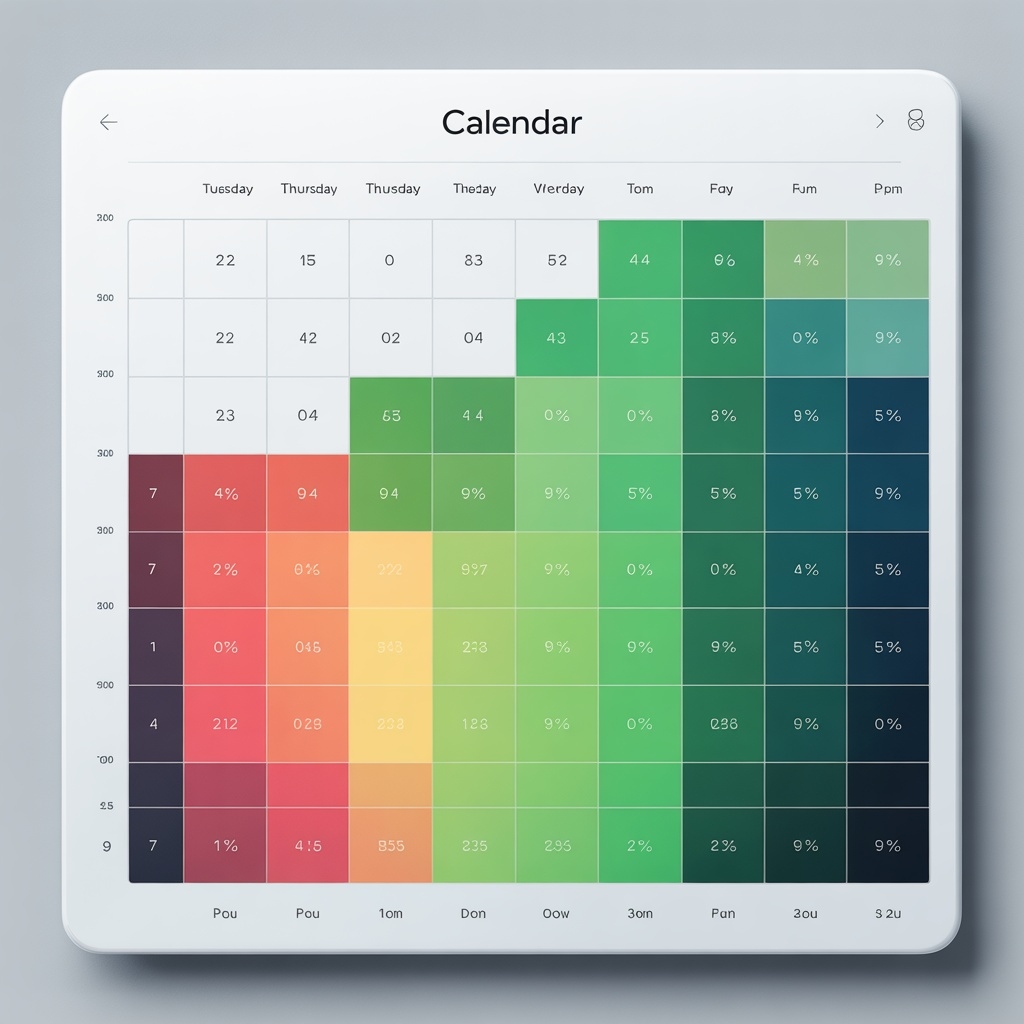
Dayparting schedules ads for specific days and times. Run reports showing conversion rate by hour and day of week. You'll typically find that Tuesday through Thursday, 9 AM to 5 PM drives 60-70% of conversions despite representing only 30% of total hours.
Increase bids 30-50% during peak hours. Decrease them 40-60% during low-performing times. Some advertisers pause ads entirely from midnight to 6 AM, saving 15-25% of daily budget for reallocation to profitable hours.
This single tactic routinely improves campaign efficiency by 20-30% because you're matching spend intensity to buyer intent.
Control Budget Pacing With Daily Caps
Platforms want to spend your budget fast. You want it to last.
Without pacing controls, Google and Facebook will exhaust daily budgets by noon, missing afternoon and evening traffic. Set your account to "Standard" delivery instead of "Accelerated." Standard pacing distributes spend evenly across the day, ensuring 24-hour coverage.
For campaigns with limited budgets, calculate your maximum daily spend by dividing monthly budget by 30.4 (average days per month). A $3,000 monthly budget becomes $98.68 daily. Set your daily cap at $95 to leave buffer for month-end adjustments.
Monitor pacing weekly using the platform's budget report. If you're spending 30% of budget in the first week of the month, you're on track. If you hit 40%, reduce bids by 15-20%.
Allocate 15% of Budget to Structured Testing
Testing isn't optional. It's how you find the next breakthrough.
Dedicate exactly 15% of total budget to structured experiments. This amount is large enough to generate statistical significance but small enough to limit downside risk.
Test one variable at a time: audience, creative, landing page, or offer. Run tests for minimum 7 days or 100 conversions, whichever comes first. This ensures you're measuring real performance, not random variation.
Use a testing budget calculator to determine required spend. For a $5,000 monthly budget, that's $750 for testing. At $30 CPC, you can afford 25 clicks per test variant. Run two variants against control for 75 total clicks, yielding results in 3-5 days.
Winners graduate to your 70% proven budget. Losers get killed immediately.
Scale Winners Using the Square Root Rule
You found a winner. Now what?
Double the budget and watch performance collapse. This happens because rapid scaling triggers algorithm relearning, destroying the optimization you built.
The square root rule prevents this. When increasing budget, multiply current daily spend by the square root of your desired increase. To double a $100/day campaign, multiply by 1.41 (square root of 2), reaching $141. Wait 5-7 days for stabilization, then repeat.
This gradual scaling maintains performance because the algorithm adapts incrementally. Advertisers using this method preserve 85-90% of original efficiency when scaling, compared to 60-70% with aggressive increases.
For campaigns already spending $500+ daily, you can increase by 20% every 3 days without triggering relearning penalties.
Cut Losers Fast With the 2X Rule
Knowing when to quit saves more money than finding winners.
Apply the 2X rule: if a campaign reaches 2X your target CPA without converting, pause it. For a $50 target CPA, kill campaigns at $100 spent with zero conversions. The math is simple—you're already behind, and continued spending rarely reverses the trend.
This rule has one exception: brand new campaigns in learning phase. Give these 7 days or 50 clicks minimum before applying 2X. Early data is noisy, and premature pausing wastes the learning investment.
For underperforming campaigns that do convert but miss targets, reduce budget by 40% and run for another week. If performance doesn't improve, reallocate that budget to proven campaigns. This measured approach prevents throwing away campaigns that need minor optimization while protecting you from prolonged losses.
Build a Monthly Reallocation Framework
Static budgets kill growth.
Review campaign performance every Monday using a simple scorecard: CPA, conversion rate, and ROAS. Rank campaigns from best to worst performer. Shift 10-15% of budget from bottom quartile to top quartile.
This weekly reallocation compounds. A campaign receiving an extra $200 weekly gains $800 monthly—enough to generate 15-30 additional conversions at typical CPAs. Meanwhile, you've stopped feeding underperformers that would have wasted that same $800.
Use a budget allocation spreadsheet to model scenarios. Input current performance metrics and test different allocation strategies. The tool shows projected conversions and ROAS for each scenario, letting you make data-driven decisions before spending real money.
Most advertisers discover they can improve overall ROAS by 25-35% through reallocation alone, without changing creative or targeting.
The Platform Budget Hierarchy
Not all platforms deserve equal investment.
Start with search—Google and Bing—because these capture active intent. People searching for "project management software" are ready to buy. Allocate 40-50% of total budget here.
Social platforms get 30-40% because they excel at targeting specific demographics and interests. Facebook, LinkedIn, and Instagram work for interruption marketing when you have strong creative.
Display and video receive 10-20% for remarketing and awareness. These channels rarely drive direct conversions but support the customer journey.
This hierarchy works because it matches budget to buyer intent. Search captures demand. Social creates demand. Display reinforces demand.
Adjust percentages based on your results, but maintain the hierarchy. A B2B company might shift 20% from social to LinkedIn specifically. An e-commerce brand might boost Facebook to 50%. The principle remains: prioritize channels closest to purchase intent.
Your 30-Day Optimization Sprint
Here's your implementation roadmap.
Week 1: Audit current allocation. Export performance data for all campaigns. Calculate actual CPA and ROAS. Identify your top 3 and bottom 3 performers.
Week 2: Implement 70-20-10 allocation. Shift budget to match the framework. Set up dayparting for top campaigns. Switch to appropriate bid strategies based on conversion volume.
Week 3: Launch structured tests with 15% budget. Create testing calendar for next 90 days. Implement daily budget caps and pacing controls.
Week 4: Build reallocation system. Set Monday morning calendar reminder for weekly review. Create budget tracking spreadsheet. Document your decision framework.
This sprint typically improves campaign efficiency by 30-45% within 60 days. The gains come from eliminating waste, not increasing spend.
The Truth About Budget Optimization
You don't need a bigger budget. You need a better system.
The frameworks in this guide—the 70-20-10 rule, progressive bid strategies, dayparting, structured testing, and smart scaling—have one thing in common: they work with any budget size. A $500 monthly advertiser benefits as much as a $50,000 monthly advertiser.
Start with one change this week. Implement the 70-20-10 allocation. Add dayparting to your top campaign. Switch one campaign to Target CPA bidding. Pick one action and execute it.
Then measure. Track your CPA, ROAS, and cost per click daily for the first week after implementing changes. You'll see the impact.
Budget optimization isn't about spending more. It's about spending smarter. And that starts with implementing systematic frameworks instead of hoping the platform algorithm does it for you.
Your competitors are wasting budget right now. Make this the month you stop joining them.
Related Guides: Campaign Planning Guide, Ab Testing Guide, Campaign Health Guide.