Break-Even ROAS Calculator: Find Your Profitability Threshold
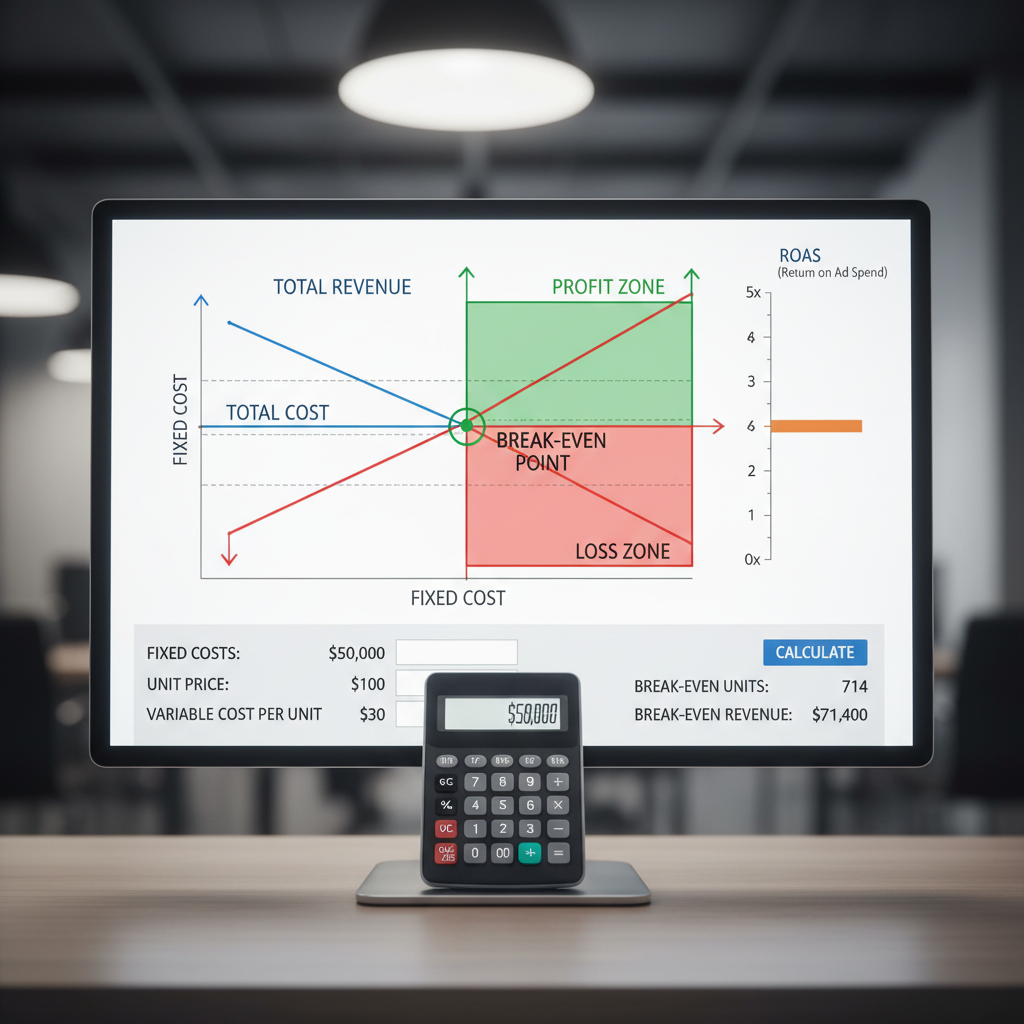
Understanding your break-even point for profitable advertising is the difference between scaling a sustainable business and burning cash on campaigns that look successful but actually lose money. Most advertisers focus on hitting arbitrary ROAS targets without understanding the fundamental threshold where their advertising transitions from unprofitable to profitable.
Your break-even ROAS is the minimum return on ad spend required to cover your costs and reach zero profit. Operating below this threshold means every dollar you spend on ads is actively losing you money. Operating above it means you're building a profitable, scalable advertising machine.
This comprehensive guide will show you exactly how to calculate your break-even ROAS, understand how your profit margins affect your required returns, and use this critical metric to set intelligent bidding strategies that protect your bottom line while maximizing growth. Jump straight to our Break-Even ROAS Calculator to find your threshold instantly.
What is Break-Even ROAS
Break-even ROAS represents the exact point where your advertising revenue equals your total costs, resulting in zero profit or loss. It's the minimum ROAS you need to achieve for your advertising to be financially sustainable.
Unlike target ROAS, which includes your desired profit margin, break-even ROAS is purely about covering costs. It answers the fundamental question: "What's the absolute minimum return I need to not lose money on this campaign?"
For example, if your break-even ROAS is 2.5, this means you need to generate $2.50 in revenue for every $1.00 spent on advertising just to break even. Anything below 2.5 loses money. Anything above 2.5 generates profit.
Understanding this threshold is crucial because it:
- Sets the floor for profitable advertising campaigns
- Informs minimum bid amounts in automated bidding strategies
- Helps identify which products or campaigns are fundamentally unprofitable
- Provides context for evaluating campaign performance
- Guides decisions about when to scale or pause campaigns
Many businesses fail to calculate their true break-even ROAS and consequently operate campaigns that appear successful based on surface-level metrics but actually destroy profitability when all costs are accounted for.
The Break-Even ROAS Formula
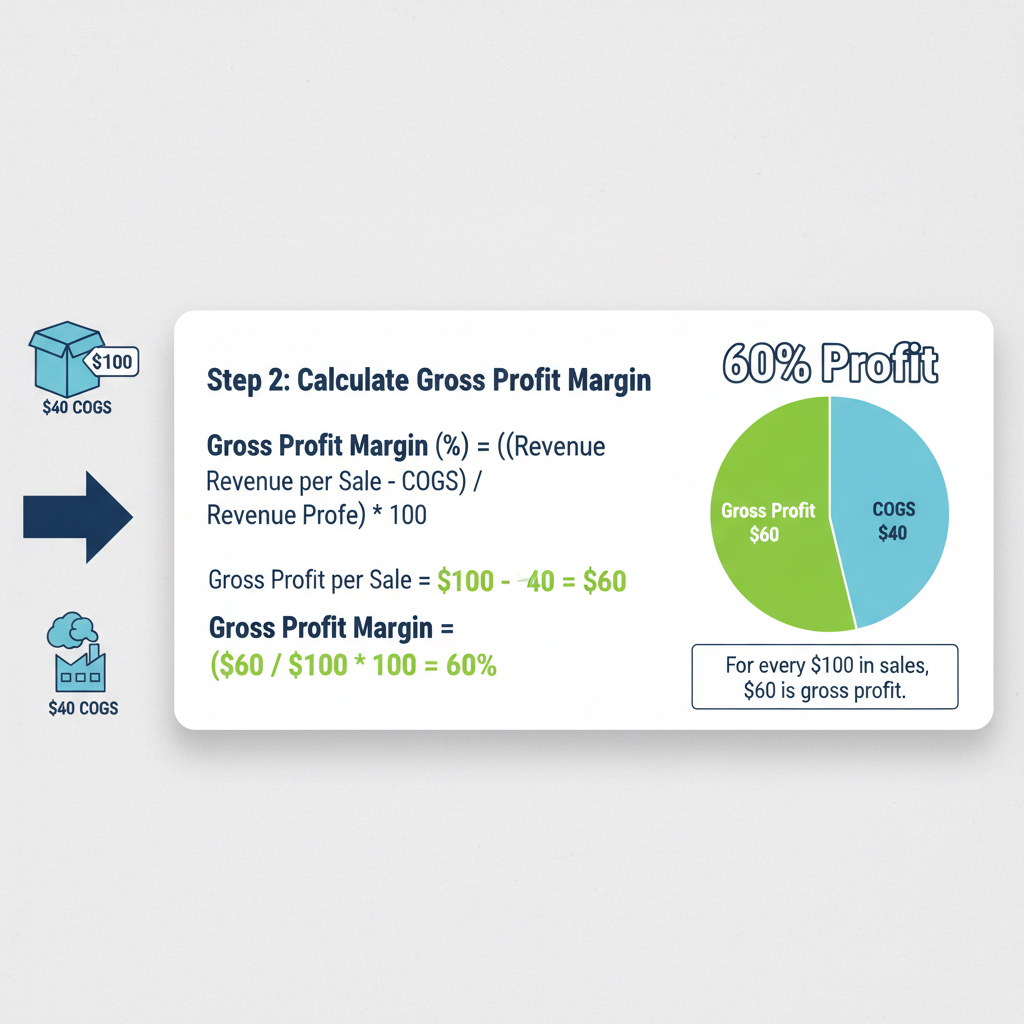
The break-even ROAS formula is straightforward but requires accurate input data to be meaningful:
Break-Even ROAS = 1 / Profit MarginWhere profit margin is calculated as:
Profit Margin = (Revenue - COGS) / RevenueLet's break this down with a practical example:
Imagine you sell a product for $100. Your cost of goods sold (COGS) includes:
- Product cost: $40
- Shipping: $8
- Payment processing (3%): $3
- Fulfillment labor: $4
Total COGS: $55
Your profit margin is: ($100 - $55) / $100 = 0.45 or 45%
Your break-even ROAS is: 1 / 0.45 = 2.22
This means you need to generate at least $2.22 in revenue for every $1 spent on advertising to break even. If you spend $1,000 on ads, you need to generate at least $2,220 in revenue to cover all your costs.
The formula reveals an important inverse relationship: the lower your profit margin, the higher your required ROAS. A business with 20% margins needs a 5.0 ROAS just to break even, while a business with 50% margins only needs 2.0 ROAS.
When calculating your profit margin, be comprehensive and include all variable costs:
- Direct product costs
- Shipping and fulfillment
- Payment processing fees
- Transaction fees
- Returns and refunds (average rate)
- Packaging materials
- Customer service costs per order
Excluding any of these costs will give you an artificially high profit margin and dangerously low break-even ROAS, leading you to think campaigns are profitable when they're actually losing money.
Use our ROAS calculator to quickly determine if your campaigns are meeting break-even thresholds and by what margin.
How Profit Margins Affect Your Target ROAS
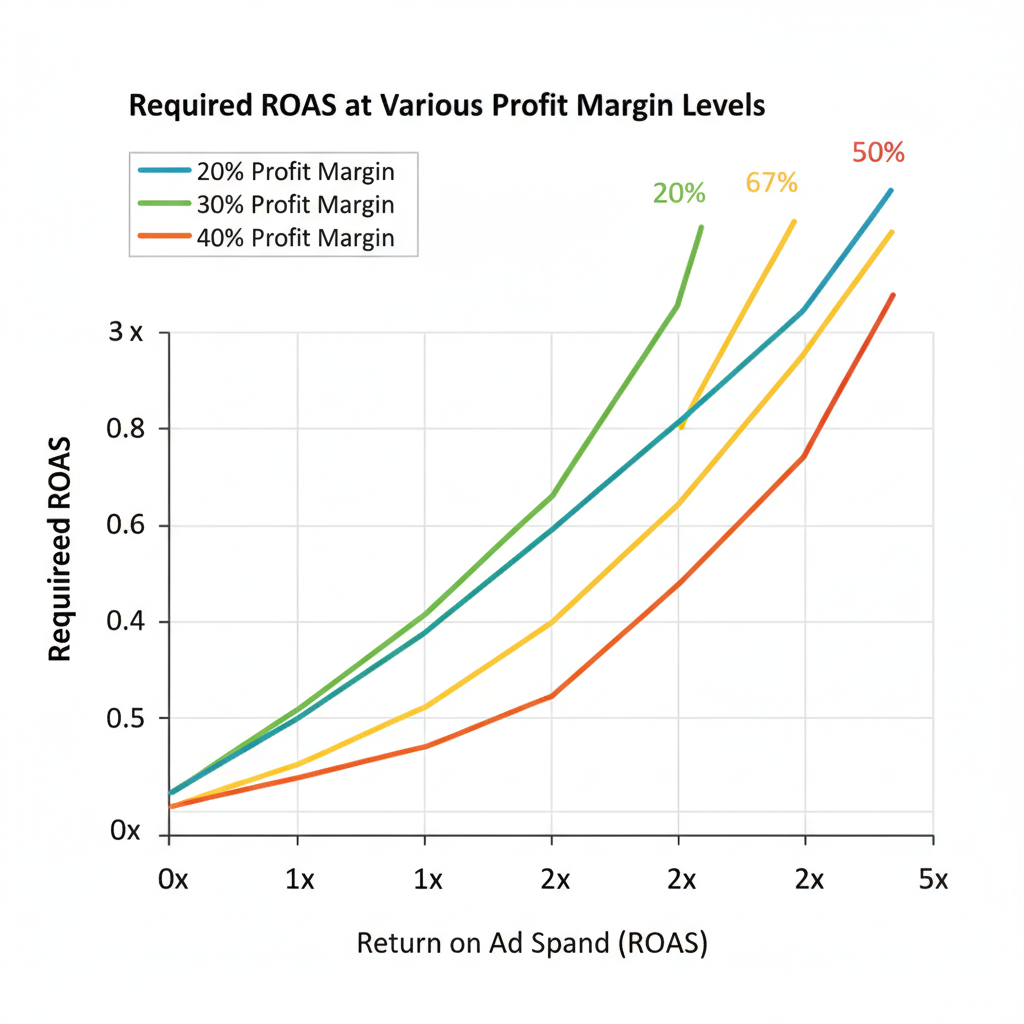
Your profit margin is the single most important factor determining your required ROAS. The relationship is inverse and exponential: small changes in margin create large swings in required ROAS.
Here's how break-even ROAS changes across different profit margins:
10% margin = 10.0 ROAS required 20% margin = 5.0 ROAS required 30% margin = 3.33 ROAS required 40% margin = 2.5 ROAS required 50% margin = 2.0 ROAS required 60% margin = 1.67 ROAS requiredThis creates dramatically different advertising dynamics for different business models:
Low-margin businesses (10-25%) face severe constraints. A grocery store with 15% margins needs 6.67 ROAS just to break even. This makes most paid advertising channels unprofitable unless they can achieve exceptional conversion rates or have very low CPMs. These businesses must focus on:- Organic and owned channels first
- Extremely targeted advertising to highest-intent audiences
- Retargeting over prospecting
- Maximizing customer lifetime value
Understanding these dynamics explains why some businesses can profitably spend millions on Meta and Google while others struggle to make any paid advertising work. It's not necessarily about skill or strategy—it's often about fundamental unit economics.
This is why improving your profit margin—even by small amounts—can transform your advertising capabilities. Increasing margin from 30% to 35% drops your break-even ROAS from 3.33 to 2.86, suddenly making previously unprofitable campaigns viable.
Strategies to improve profit margins for better ROAS flexibility:
- Negotiate better supplier costs
- Optimize shipping and fulfillment
- Reduce return rates through better product information
- Implement dynamic pricing
- Create product bundles that increase average order value
- Reduce payment processing fees through volume discounts
Calculating Break-Even by Product Category
Most businesses don't have a single profit margin—they have different margins across product categories, price points, and customer segments. This means you need different break-even ROAS calculations for different parts of your business.
Consider a fashion retailer with these product categories:
Premium dresses- Average price: $200
- COGS: $80
- Margin: 60%
- Break-even ROAS: 1.67
- Average price: $50
- COGS: $30
- Margin: 40%
- Break-even ROAS: 2.5
- Average price: $25
- COGS: $18
- Margin: 28%
- Break-even ROAS: 3.57
This variation has profound implications for advertising strategy:
- Campaign segmentation: Create separate campaigns for each category so you can monitor ROAS independently and apply category-specific targets.
- Bidding strategy: Use higher bids for high-margin products where you have more room for profitable customer acquisition. Reduce bids or pause campaigns for low-margin products that consistently underperform.
- Creative strategy: Invest more in creative development and testing for high-margin products where the payoff is greater.
- Budget allocation: Allocate more budget to promoting high-margin categories where you have more flexibility to operate profitably at lower ROAS.
- Product mix optimization: Consider using low-margin products as loss leaders to acquire customers, then focus on lifetime value through repeat purchases of higher-margin items.
Many businesses make the mistake of applying a single ROAS target across all products, which either:
- Sets the bar too high, causing them to pause profitable campaigns for high-margin products
- Sets the bar too low, causing them to continue unprofitable campaigns for low-margin products
Calculate break-even ROAS for each significant product category and use category-specific targets in your advertising platform.
For businesses with hundreds or thousands of SKUs, group products into margin tiers:
- Tier 1: 50%+ margin (break-even ROAS < 2.0)
- Tier 2: 35-50% margin (break-even ROAS 2.0-2.86)
- Tier 3: 25-35% margin (break-even ROAS 2.86-4.0)
- Tier 4: <25% margin (break-even ROAS > 4.0)
Then create campaigns and bidding strategies aligned with these tiers.
Break-Even ROAS vs Target ROAS
Break-even ROAS and target ROAS serve different purposes and should both inform your advertising strategy, but they're fundamentally different metrics.
Break-even ROAS is your floor—the minimum return required to not lose money. It's determined purely by your cost structure and profit margins. Operating below this level is financially unsustainable. Target ROAS is your goal—the return you aim to achieve that includes your desired profit margin on advertising spend. It's determined by your profitability goals, growth strategy, and competitive dynamics.The relationship between them is:
Target ROAS = Break-Even ROAS + Profit BufferFor example, if your break-even ROAS is 2.5, you might set a target ROAS of 3.5, giving you a 1.0 buffer that represents your profit margin on ad spend.
When you achieve 3.5 ROAS with a 2.5 break-even point, the calculation looks like this:
- Ad spend: $1,000
- Revenue: $3,500
- COGS (at 40% margin): $2,100
- Total profit: $1,400
- Net profit after ad spend: $400
That $400 represents 40% profit on your $1,000 ad spend, or a 40% profit margin.
Your target ROAS should vary based on your business stage and goals:
Growth stage: Target ROAS might be only 10-25% above break-even. You're prioritizing customer acquisition and market share over immediate profitability. You might accept 2.75 ROAS when break-even is 2.5. Profitability stage: Target ROAS might be 50-100% above break-even. You're prioritizing profit margins and operating efficiency. You might require 4.0 ROAS when break-even is 2.5. Scaling stage: Target ROAS might vary by channel and campaign type. New customer acquisition campaigns might target lower ROAS (closer to break-even), while retargeting campaigns should achieve much higher ROAS.The critical principle: never operate campaigns below break-even ROAS for extended periods unless you have a specific strategic reason (like acquiring customers with strong lifetime value potential) and have explicitly calculated the acceptable customer acquisition cost.
Many businesses unknowingly run campaigns below break-even because they haven't properly calculated their true break-even point or haven't segmented their analysis by product, channel, or customer type.
Using Break-Even ROAS to Set Bidding Strategies
Your break-even ROAS should directly inform how you configure bidding strategies in Meta, Google, and TikTok advertising platforms.
Target ROAS Bidding (Google & Meta)When using target ROAS automated bidding, set your target well above your break-even point. A common mistake is setting target ROAS exactly at break-even, which causes approximately 50% of conversions to fall below break-even (since the platform aims for the target on average).
Best practice: Set target ROAS at 125-150% of break-even ROAS.
If break-even is 2.5, set platform target at 3.1-3.75.
This ensures that even when the algorithm's performance varies, the majority of spend remains profitable. Over time, as the algorithm learns and stabilizes, you can gradually reduce the target to optimize between volume and efficiency.
Maximize Conversion Value BiddingWhen using maximize conversion value bidding without a ROAS target, monitor actual ROAS closely and pause campaigns if they drop below break-even for more than a few days. Set automated rules to alert you when ROAS drops below 110% of break-even.
Manual BiddingCalculate maximum cost per acquisition based on your break-even ROAS:
Max CPA = Average Order Value × Profit MarginIf your average order value is $100 and profit margin is 40%, your maximum CPA is $40. This ensures you don't pay more to acquire a customer than the gross profit they generate.
Budget AllocationUse break-even ROAS to determine which campaigns deserve budget increases:
- Campaigns at 200%+ of break-even: Maximize budget to capture all available volume
- Campaigns at 125-200% of break-even: Increase budget cautiously while monitoring efficiency
- Campaigns at 100-125% of break-even: Maintain current budget and optimize
- Campaigns below 100% of break-even: Reduce budget or pause while diagnosing issues
Structure your campaign portfolio with different ROAS expectations:
- Prospecting campaigns: 125% of break-even (lower ROAS acceptable for new customer acquisition)
- Retargeting campaigns: 300%+ of break-even (should be highly efficient)
- Brand campaigns: 400%+ of break-even (highest-intent traffic)
This portfolio approach allows you to balance growth and profitability while ensuring your blended ROAS across all campaigns exceeds break-even.
Use our Daily Budget Calculator to determine appropriate budget levels for campaigns at different ROAS performance levels.
Interactive Break-Even Calculator
To calculate your break-even ROAS, you need to determine your true profit margin including all variable costs:
Step Calculate Revenue
Average order value: $______
Step Calculate All Variable Costs
- Product cost: $______
- Shipping cost: $______
- Payment processing (typically 2.9% + $0.30): $______
- Packaging: $______
- Fulfillment labor: $______
- Average return cost (% of orders × cost): $______
- Other variable costs: $______
Step Calculate Profit Margin
(Revenue - Total COGS) / Revenue = _______%
Step Calculate Break-Even ROAS
1 / Profit Margin = _______
Step Set Target ROAS
Break-Even ROAS × 1.25 to 1.5 = _______
Use this target ROAS in your advertising platform bidding strategies to ensure profitable operation while giving the algorithm room to optimize.
For more advanced calculations that account for customer lifetime value, customer acquisition cost targets, and multi-product scenarios, use our comprehensive ROAS calculator which includes break-even analysis tools.
Setting Profitable ROAS Targets for Your Business
Understanding your break-even ROAS is the foundation, but implementing it effectively requires translating this knowledge into specific targets for different campaigns, channels, and scenarios.
Create a ROAS Target Framework: Tier 1: New Customer Acquisition- Target ROAS: 110-130% of break-even
- Rationale: Acquiring new customers has long-term value beyond initial purchase
- Monitor: Customer lifetime value to ensure overall profitability
- Example: If break-even is 3.0, accept 3.3-3.9 ROAS
- Target ROAS: 250-400% of break-even
- Rationale: High-intent audiences should convert more efficiently
- Monitor: Frequency to avoid ad fatigue
- Example: If break-even is 3.0, require 7.5-12.0 ROAS
- Target ROAS: 400-600% of break-even
- Rationale: People searching your brand would likely convert anyway
- Monitor: Impression share to ensure you're capturing your brand traffic
- Example: If break-even is 3.0, require 12.0-18.0 ROAS
During peak seasons (Black Friday, holidays), you can often accept lower ROAS because:
- Higher average order values improve profit margins
- Customer lifetime value is typically higher for holiday acquires
- Competitive dynamics require market share defense
During off-seasons, raise target ROAS to compensate for lower volume with higher efficiency.
Channel-Specific Targets:Different channels have different efficiency profiles:
- Meta prospecting: 120-150% of break-even
- Google Shopping: 150-200% of break-even
- Google Search: 200-300% of break-even
- Display/YouTube: 100-120% of break-even (brand building plus conversions)
- TikTok: 110-140% of break-even
Your break-even ROAS isn't static. It changes when:
- Product costs change
- Shipping rates change
- You negotiate better payment processing fees
- You improve fulfillment efficiency
- You adjust pricing
Recalculate your break-even ROAS quarterly and adjust campaign targets accordingly. A 5% improvement in profit margin can unlock significant new advertising opportunities.
Document Your Targets:Create a simple reference document for your team:
- Break-even ROAS by product category
- Target ROAS by campaign type
- Minimum performance thresholds for campaign continuation
- Escalation procedures when campaigns fall below break-even
This ensures everyone managing advertising understands the financial boundaries of profitable operation and can make informed decisions about bidding, budgets, and optimization priorities.
The most successful advertisers don't chase arbitrarily high ROAS—they understand their break-even point, set targets appropriately above it based on strategic priorities, and operate with discipline within those guardrails. This approach enables sustainable, profitable scaling rather than the boom-bust cycles that plague businesses without clear profitability thresholds.
Start with your break-even calculation, implement tiered targets based on campaign type and strategic goals, and monitor performance against these thresholds religiously. This is the foundation of profitable paid advertising at any scale.