Ad Campaign Budget Planning Template: Complete Spreadsheet Guide
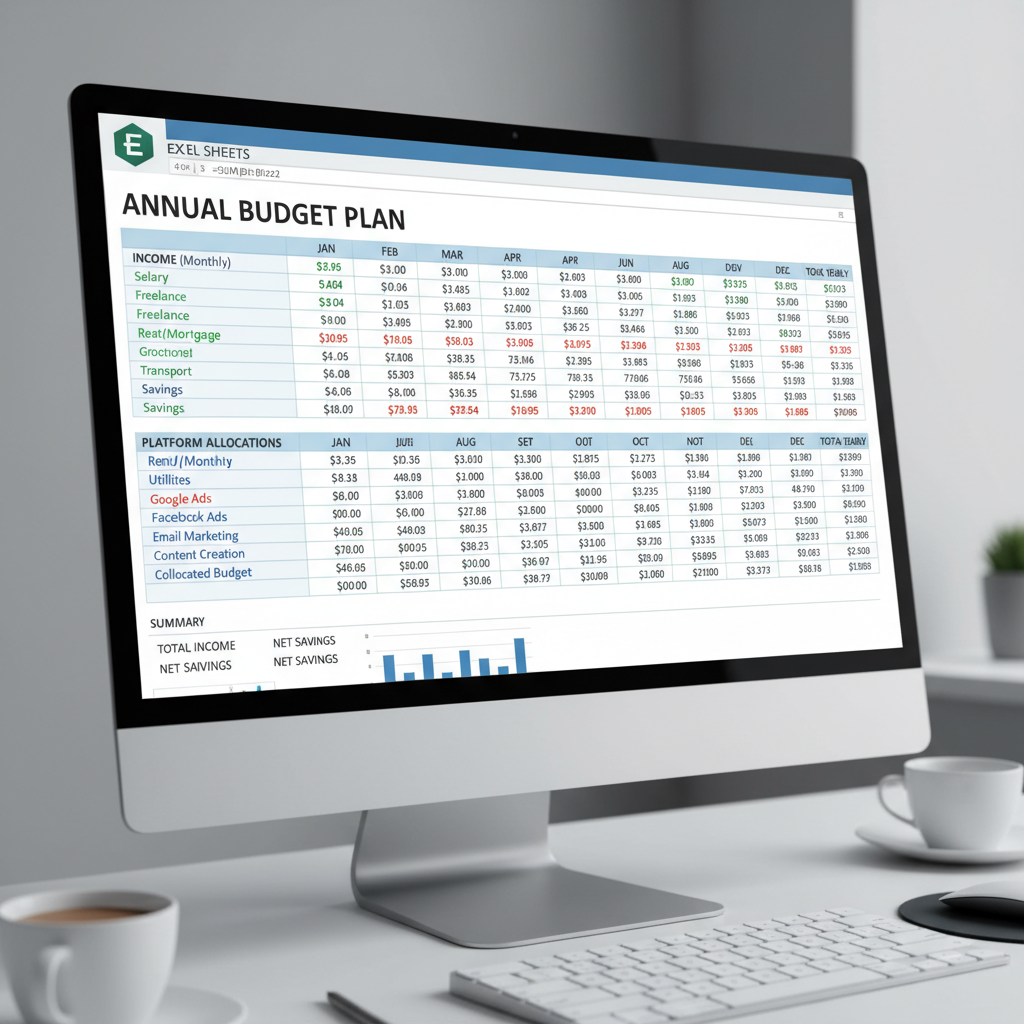
Effective advertising budget planning is the difference between sustainable growth and chaotic spending. Without a structured budget plan, you'll struggle to allocate resources strategically, miss seasonal opportunities, and find yourself constantly making reactive budget decisions instead of proactive ones.
A comprehensive budget planning template doesn't just track spending—it creates a strategic framework that aligns advertising investments with business goals, ensures proper resource allocation across platforms and campaigns, and enables performance monitoring that drives continuous improvement.
This guide walks through building a complete budget planning system from annual strategy down to daily campaign execution. You'll learn the essential components of effective budget plans, how to structure allocations across time periods and platforms, and how to maintain budget discipline while staying flexible enough to capitalize on opportunities.
Whether you're planning your first advertising budget or refining an existing system, this template approach will help you spend smarter, scale faster, and prove the value of your advertising investments.
Essential Components of a Budget Plan
A effective budget planning template needs several interconnected components that work together to provide both strategic direction and tactical control.
1. Top-Line Budget Number
Your budget planning starts with a single number: your total advertising budget. This can be determined through several methods:
Percentage of Revenue Method:- Early-stage/growth companies: 12-20% of revenue
- Established companies: 7-12% of revenue
- Mature companies: 5-8% of revenue
- Calculate target customers to acquire
- Multiply by acceptable CAC
- Add retargeting and retention budget (20-30% of acquisition budget)
- Research competitor spending levels
- Match or exceed based on market share goals
- Adjust for efficiency differences
- Define specific growth targets (revenue, customers, market share)
- Work backward to required acquisition volume
- Calculate budget needed to hit targets at expected conversion rates
2. Time Period Structure
Your template should break budgets into nested time periods:
Annual Level:- Total yearly budget
- Year-over-year growth targets
- Major strategic initiatives
- Reserve budget (10-15% for testing and opportunities)
- Seasonal adjustments
- Product launch timing
- Campaign initiatives
- Platform testing budgets
- Operational budget allocation
- Platform distribution
- Campaign-specific budgets
- Performance targets by month
- Tactical budget management
- Pacing controls
- Quick optimization decisions
- Immediate reallocation opportunities
3. Platform Distribution
Budget allocation across advertising platforms should reflect:
Performance-Based Allocation (70%):- Proven platforms with positive ROAS
- Campaigns with consistent performance
- Channels that efficiently deliver target metrics
- Platforms showing promise but not yet proven
- Campaigns in testing phase with positive signals
- Channels being scaled from small tests
- New platforms or campaign types
- Experimental audiences or creative approaches
- Innovation budget for learning
Use our Budget Allocator to calculate optimal distribution across your advertising platforms based on performance data and growth goals.
4. Campaign Type Breakdown
Within each platform, distribute budget across campaign types:
Prospecting (50-60%):- Cold audience acquisition
- New customer campaigns
- Brand awareness efforts
- Top-of-funnel initiatives
- Website visitor retargeting
- Cart abandonment campaigns
- Product view remarketing
- Past customer reactivation
- Existing customer campaigns
- Loyalty and repeat purchase
- Upsell and cross-sell
- Customer lifetime value growth
5. Performance Targets
Budgets should tie directly to performance expectations:
Input Metrics:- Target CPM ranges by platform
- Expected click-through rates
- Anticipated conversion rates
- Projected CPA or ROAS
- Expected conversions by campaign
- Revenue targets by platform
- Customer acquisition goals
- Return on ad spend expectations
- Customer acquisition cost
- Cost per lead
- Blended ROAS across all channels
- Marketing efficiency ratio (total revenue / total spend)
Annual Budget Planning Framework
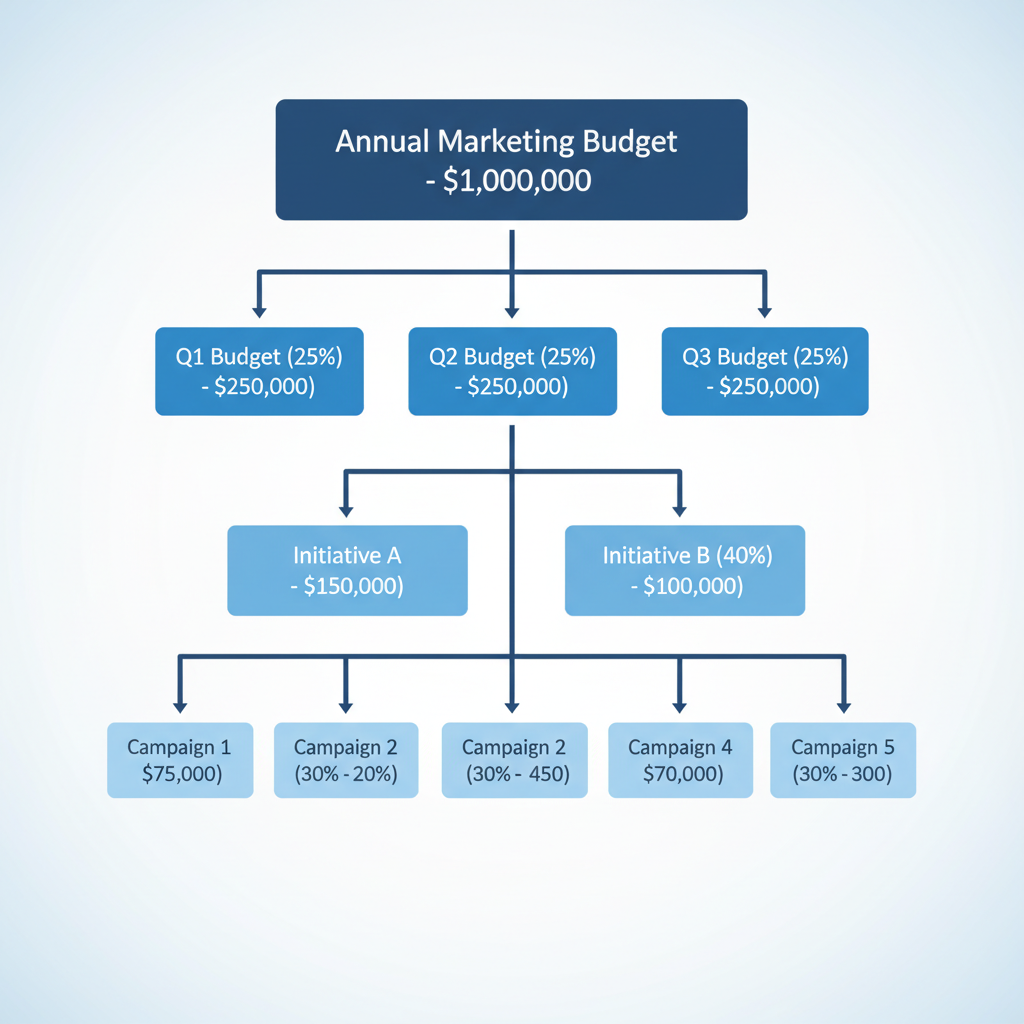
Annual planning provides strategic direction and ensures your advertising supports business objectives throughout the year.
Step 1: Set Annual Revenue and Growth Goals
Start with business fundamentals:
Current State:- Last year's revenue: $1,200,000
- Last year's ad spend: $120,000 (10% of revenue)
- Customers acquired: 1,000
- Average customer value: $1,200
- Target revenue: $1,800,000 (50% growth)
- New customers needed: 500 (assuming retention of current customers)
- Average customer value: $1,200 (conservative, no increase assumed)
Step 2: Calculate Required Budget
Method 1 - Percentage of Revenue:- Target revenue: $1,800,000
- Ad spend percentage: 12% (higher due to growth phase)
- Annual budget: $216,000
- New customers needed: 500
- Target CAC: $300 (based on $1,200 LTV, 4:1 ratio)
- Acquisition budget: $150,000
- Retargeting/retention budget: $45,000 (30% of acquisition)
- Total budget: $195,000
- Last year CAC: $120 ($120,000 ÷ 1,000 customers)
- New customers needed: 500
- Expected efficiency decline at scale: 25%
- Adjusted CAC: $150
- Acquisition budget: $75,000
Existing customer growth: $600,000 revenue / 6 ROAS = $100,000- Total budget: $175,000
After comparing methods, set annual budget at $200,000:
- Accounts for growth investment
- Conservative enough to maintain profitability
- Provides buffer for testing and opportunities
Step 3: Build Quarterly Distribution
Distribute annual budget across quarters based on business seasonality:
Q1 (January-March): $40,000 (20%)- Post-holiday slowdown
- Foundation building
- Testing new strategies
- Lower spend period
- Spring campaigns
- Pre-summer push
- Scaling successful Q1 tests
- Growth acceleration
- Summer campaigns
- Back-to-school (if relevant)
- Building momentum for Q4
- Maximum testing before peak season
- Holiday season
- Black Friday / Cyber Monday
- Year-end push
- Peak revenue period
Step 4: Set Annual Platform Allocation
Based on previous performance and growth goals:
Meta (Facebook/Instagram): $90,000 (45%)- Proven platform with strong ROAS
- Large audience reach
- Effective retargeting
- Primary growth driver
- High-intent search traffic
- Shopping campaign performance
- YouTube testing and scaling
- Strong conversion rates
- Growing platform
- Younger demographic reach
- Creative testing opportunity
- Expansion beyond core platforms
- New platform exploration (Pinterest, Snapchat, LinkedIn)
- Alternative campaign types
- Innovation and learning
- Quick opportunity response
Monthly Budget Allocation Strategy
Monthly budgets operationalize your annual plan, providing tactical control while maintaining strategic direction.
Creating Monthly Budget Templates
Each month should include:
1. Total Monthly Budget- Derived from quarterly allocation
- Adjusted for days in month (normalize daily spend)
- Account for known events (sales, launches, holidays)
- Quarterly budget: $40,000
- Monthly split: $12,000 (30% of Q1)
- Reasoning: Testing month, lower volume expected
- Daily budget target: $387 ($12,000 ÷ 31 days)
Break monthly total across platforms:
Meta: $5,400 (45%)- Prospecting campaigns: $3,240 (60%)
- Retargeting campaigns: $1,620 (30%)
- Retention campaigns: $540 (10%)
- Search campaigns: $2,520 (60%)
- Shopping campaigns: $1,260 (30%)
- Display/YouTube: $420 (10%)
- Prospecting video campaigns: $1,200 (80%)
- Retargeting campaigns: $300 (20%)
- New platform tests
- Alternative creative formats
- Audience experiments
Monthly Adjustment Factors
Adjust base allocations for month-specific factors:
Seasonality Multipliers:- January: 0.8x (post-holiday slowdown)
- February: 0.9x (short month, lower consumer spending)
- March: 1.0x (baseline)
- April: 1.1x (spring increase)
- November: 1.5x (holiday ramp-up)
- December: 1.3x (holiday peak but fewer days)
- Product launches: +20-50% in launch month
- Major sales: +30-100% during event period
- Competitive events: +10-25% to maintain visibility
- Planned downtime: -100% during maintenance or inventory issues
- Overperforming platforms: +10-20% budget increase
- Underperforming platforms: -10-20% budget decrease
- New winning campaigns: +15-30% to scale winners
- Fatigued campaigns: -20-50% or pause entirely
Month-to-Month Budget Pacing
Monitor monthly pacing to avoid overspending or underspending:
Daily Pacing Calculation:- Month budget: $12,000
- Days in month: 31
- Target daily spend: $387
- Week 1 target: $2,710 (7 days × $387)
- Week 1 actual: $2,450
- Variance: -$260 (underspending)
- Action: Increase bids or budgets to catch up
- Target spend to date: $5,805 (15 × $387)
- Actual spend to date: $5,200
- Variance: -$605 (10.4% under)
- Remaining budget: $6,800
- Remaining days: 16
- Adjusted daily target: $425
- Compare planned vs actual spend
- Analyze variance causes
- Adjust next month's plan
- Document learnings
Use our Daily Budget Calculator to determine optimal daily budgets based on your monthly targets and campaign objectives.
Platform Budget Distribution

Effective platform distribution balances proven performance with growth investment and strategic testing.
Meta Budget Distribution
Total Meta Monthly Budget: $5,400 Campaign Structure: Prospecting: $3,240- Broad audience prospecting: $1,620 (50%)
- Interest-based targeting: $972 (30%)
- Lookalike audiences: $648 (20%)
- Website visitors (90-day): $810 (50%)
- Engagement retargeting: $324 (20%)
- Cart abandonment: $486 (30%)
- Customer reactivation: $324 (60%)
- Upsell campaigns: $216 (40%)
- Prospecting campaigns: $105/day
- Retargeting campaigns: $52/day
- Retention campaigns: $17/day
Google Ads Budget Distribution
Total Google Monthly Budget: $4,200 Campaign Structure: Search: $2,520- Branded search: $504 (20%)
- High-intent keywords: $1,260 (50%)
- Broader keywords: $756 (30%)
- High-priority products: $630 (50%)
- Medium-priority products: $378 (30%)
- Low-priority products: $252 (20%)
- YouTube video campaigns: $252 (60%)
- Display retargeting: $168 (40%)
- Search campaigns: $81/day
- Shopping campaigns: $41/day
- Display/YouTube: $14/day
TikTok Budget Distribution
Total TikTok Monthly Budget: $1,500 Campaign Structure: Prospecting: $1,200- Broad interest targeting: $720 (60%)
- Behavioral targeting: $480 (40%)
- Website visitor retargeting: $180 (60%)
- Video engagement retargeting: $120 (40%)
- Prospecting campaigns: $39/day
- Retargeting campaigns: $10/day
Multi-Platform Budget Flexibility
Build in allocation flexibility:
Weekly Reallocation Authority:- Can shift up to 10% between campaigns within same platform
- No formal approval needed
- Document reasoning and results
- Can shift up to 20% between platforms
- Requires performance justification
- Must maintain minimum platform spend for algorithm learning
- Can restructure platform mix entirely
- Based on comprehensive performance review
- Realign with business priorities and seasonal needs
Campaign-Level Budget Assignment
Individual campaign budgets operationalize platform allocations and enable granular optimization.
Campaign Budget Sizing Principles
Minimum Budget Thresholds: Meta Campaigns:- Minimum: $20/day per campaign
- Optimal: $50+/day for consistent learning
- Required for CBO (Campaign Budget Optimization): $50+/day across all ad sets
- Minimum: $10/day per campaign
- Optimal: $30+/day for adequate coverage
- High-competition keywords: $50+/day minimum
- Minimum: $20/day per campaign
- Optimal: $50+/day for product coverage
- High-priority products: $100+/day
- Minimum: $20/day per ad group
- Optimal: $50+/day for stable delivery
- Creative testing: $100+/day recommended
Campaign Priority-Based Budgets
Assign budgets based on campaign priority level:
Tier 1 - Proven Winners (50% of platform budget):- Campaigns with sustained positive ROAS (>4:1)
- Consistent volume and stable performance
- Core revenue drivers
- Maximum budget allocation
- Platform budget: $5,400
- Tier 1 allocation: $2,700 (50%)
- Campaign receives: $1,350 (50% of Tier 1 as top performer)
- Daily budget: $44
- Campaigns with acceptable ROAS (2.5-4:1)
- Important for volume and reach
- Room for optimization
- Moderate budget allocation
- Platform budget: $5,400
- Tier 2 allocation: $1,620 (30%)
- Campaign receives: $810 (50% of Tier 2 budget)
- Daily budget: $26
- New campaigns under evaluation
- Testing new audiences or creative
- Growth opportunities
- Limited budget with clear success criteria
- Platform budget: $5,400
- Tier 3 allocation: $1,080 (20%)
- Campaign receives: $540 (50% of Tier 3 budget)
- Daily budget: $17
- Success threshold: Achieve 3:1 ROAS within 30 days
Dynamic Budget Assignment
Campaign budgets should adjust based on real-time performance:
Automated Rules (Platform-Level): Meta Example:- If ROAS > 5:1 for 3 consecutive days → Increase daily budget by 20%
- If ROAS < 2:1 for 3 consecutive days → Decrease daily budget by 20%
- If ROAS < 1:1 for 5 consecutive days → Pause campaign
- If ROAS > 6:1 for 7 days → Increase budget by 25%
- If CPA < target by 30%+ for 7 days → Increase budget by 15%
- If CPA > target by 50%+ for 7 days → Decrease budget by 25%
- Check all campaigns against targets
- Identify top 20% performers → Allocate +10-20% budget
- Identify bottom 20% performers → Reduce budget or optimize
- Reallocate savings from poor performers to winners
- Comprehensive performance analysis
- Platform reallocation if needed
- Campaign structure optimization
- Seasonal adjustment planning
Budget Pacing and Monitoring
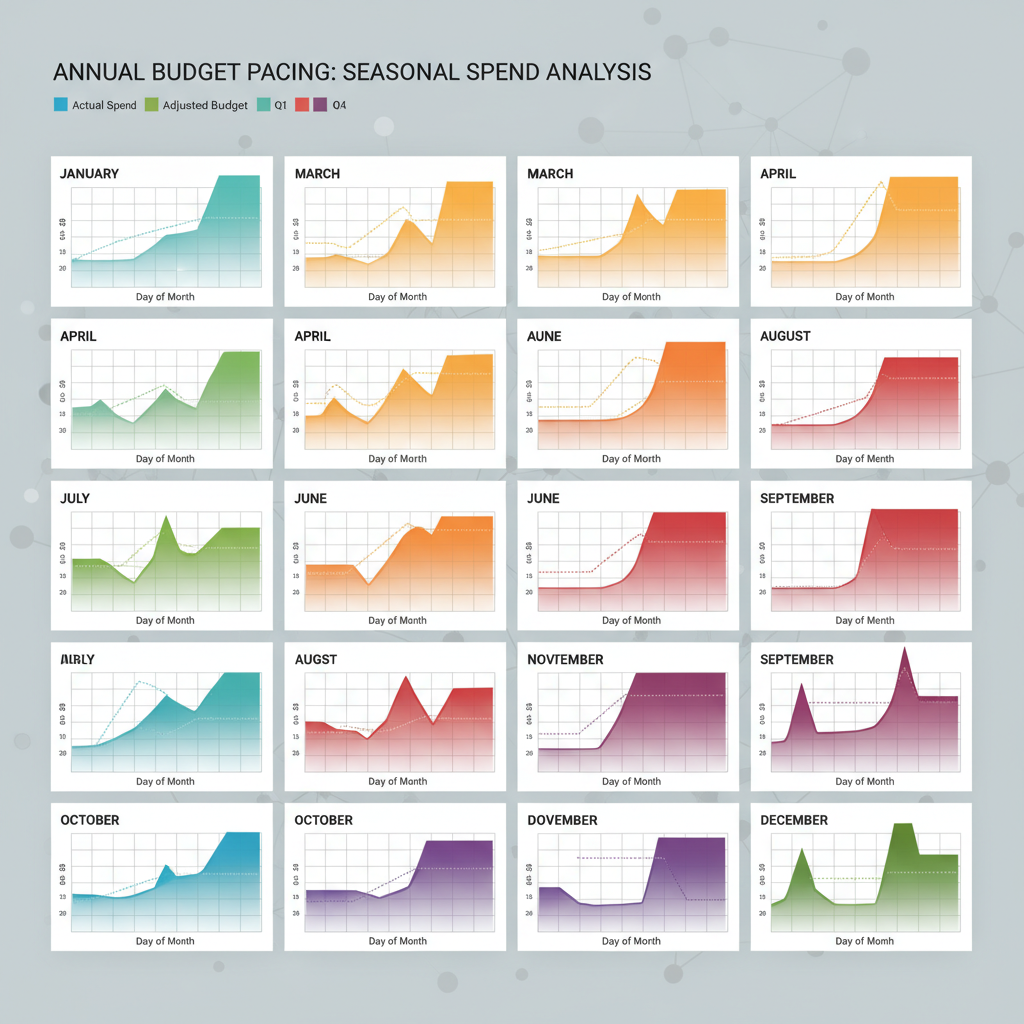
Effective budget management requires systematic monitoring and pacing controls.
Daily Pacing Monitoring
Morning Check (9 AM):- Review previous day's total spend
- Compare to daily target
- Check if any campaigns overspent
- Verify all campaigns active and delivering
- Review morning spend (should be ~40% of daily target)
- Identify overdelivering campaigns
- Adjust budgets if significantly over/under pacing
- Check for any errors or issues
- Review total day spend (should be 80-90% of daily target)
- Identify campaigns needing next-day adjustments
- Prepare budget changes for tomorrow
- Document any anomalies
Weekly Pacing Analysis
Every Monday, review previous week:
Spend Analysis:- Total spend vs weekly target
- Platform-level variance
- Campaign-level variance
- Identify consistent over/underspending
- Meta performing well, no change needed
- Google on track, continue monitoring
- TikTok stable, on target
- Testing significantly underspent - activate new tests or reallocate
Monthly Pacing Reports
End-of-Month Analysis Template: 1. Spend Summary- Total budget: $12,000
- Total spent: $11,750
- Variance: -$250 (-2.1%)
- Unspent budget: Reallocate or roll to reserve
- Increase Meta budget by $300 (strong performance)
- Maintain Google budget (excellent ROAS)
- Decrease TikTok budget by $100 (efficiency concern)
- Reduce Testing budget by $200 (underspend and low ROAS)
Budget Pacing Automation
Set up automated pacing controls: Platform Campaign Budget Pacing: Meta:- Use Campaign Budget Optimization (CBO) for campaign groups
- Set daily spend limits at campaign level
- Enable automated budget pacing in Ads Manager
- Set daily budgets (Google automatically manages monthly pacing)
- Use shared budgets for campaign groups
- Enable automated bidding with spend targets
- Set daily budgets at ad group level
- Use campaign budget optimization for TikTok campaigns
- Monitor closely as pacing can be less predictable
- Consider tools like Madgicx, Revealbot, or Smartly.io for cross-platform budget pacing
- Set up automated rules for budget adjustments
- Create alerts for significant pacing deviations
Budget Planning Template Walkthrough
Here's a complete template structure you can implement:Template Structure
Tab 1: Annual Overview- Total annual budget
- Quarterly breakdown
- Platform allocation
- High-level goals and targets
- Reserve budget allocation
- Four quarterly tabs (Q1, Q2, Q3, Q4)
- Monthly budget distribution
- Platform allocation per month
- Major initiatives and campaigns
- Expected performance targets
- Current month detailed plan
- Daily budget targets
- Platform and campaign breakdown
- Daily spend tracking
- Variance calculation
- Pacing status
- Separate tabs for each platform
- Campaign-level budget allocation
- Performance targets by campaign
- Actual performance tracking
- Budget reallocation decisions
- Spend vs budget (actual vs planned)
- Key performance metrics (ROAS, CPA, conversions)
- Trend analysis (week-over-week, month-over-month)
- Platform comparison
- Campaign rankings
Example Monthly Budget Template
JANUARY 2026 - BUDGET PLAN TOTAL MONTHLY BUDGET: $12,000 Daily Target: $387 Working Days: 31 PLATFORM ALLOCATION: META - $5,400 (45%) ├─ Prospecting: $3,240 ($105/day) │ ├─ Broad Audience: $1,620 │ ├─ Interest Targeting: $972 │ └─ Lookalikes: $648 ├─ Retargeting: $1,620 ($52/day) │ ├─ Website Visitors: $810 │ ├─ Engagement: $324 │ └─ Cart Abandonment: $486 └─ Retention: $540 ($17/day) ├─ Reactivation: $324 └─ Upsell: $216 GOOGLE - $4,200 (35%) ├─ Search: $2,520 ($81/day) │ ├─ Branded: $504 │ ├─ High-Intent: $1,260 │ └─ Broader: $756 ├─ Shopping: $1,260 ($41/day) │ ├─ High Priority: $630 │ ├─ Medium Priority: $378 │ └─ Low Priority: $252 └─ Display/YouTube: $420 ($14/day) ├─ YouTube: $252 └─ Display: $168 TIKTOK - $1,500 (12.5%) ├─ Prospecting: $1,200 ($39/day) │ ├─ Broad Interest: $720 │ └─ Behavioral: $480 └─ Retargeting: $300 ($10/day) ├─ Website Visitors: $180 └─ Video Engagement: $120 TESTING - $900 (7.5%) └─ New Platforms/Campaigns: $900 ($29/day) PERFORMANCE TARGETS:- Total Conversions: 400
- Target ROAS: 4:1
- Expected Revenue: $48,000
- Target CPA: $30
Daily Tracking Template
DATE: January 15, 2026 BUDGET STATUS: Daily Target: $387 Actual Spend: $412 Variance: +$25 (+6.5%) Month-to-Date: Target: $5,805 (15 days × $387) Actual: $5,650 Variance: -$155 (-2.7%) PLATFORM PERFORMANCE: Meta: Budget: $174 | Actual: $182 | Variance: +$8 Conversions: 8 | ROAS: 4.6:1 | Status: ✓ Google: Budget: $135 | Actual: $128 | Variance: -$7 Conversions: 6 | ROAS: 5.1:1 | Status: ✓ TikTok: Budget: $48 | Actual: $52 | Variance: +$4 Conversions: 2 | ROAS: 3.2:1 | Status: ✓ Testing: Budget: $29 | Actual: $50 | Variance: +$21 Conversions: 1 | ROAS: 1.8:1 | Status: ⚠ Overspent ACTIONS NEEDED:- Reduce testing budget tomorrow to $20 to compensate overspend
- Meta performing well, maintain current budgets
- Google slight underspend, consider +10% tomorrow
Adjusting Budgets Based on Performance
Budget planning isn't set-and-forget. The best advertisers continuously adjust based on performance signals.
Performance-Triggered Adjustments
Strong Performance Indicators (Increase Budget): Scenario 1: ROAS Significantly Above Target- Current: 6:1 ROAS, target was 4:1
- Action: Increase budget by 20-30%
- Frequency: Can adjust every 3-4 days if performance sustains
- Cap: Don't increase more than 50% per week
- Current: $18 CPA, target was $30, volume is strong
- Action: Increase budget by 25-40%
- Frequency: Can adjust every 2-3 days
- Cap: Monitor for efficiency decline, scale until CPA reaches target
- Current: Converting well but limited by budget
- Action: Increase budget by 30-50%
- Test: Scale more aggressively on proven campaigns
- Monitor: Watch for saturation signals
- Current: 2:1 ROAS, target is 4:1
- Action: Decrease budget by 30-50% OR pause to optimize
- Timeline: Give 7 days to improve before major cuts
- Alternative: Shift budget to better-performing campaigns
- Current: CPA increased from $25 to $45 over 2 weeks
- Action: Decrease budget by 20-30%
- Diagnosis: Identify cause (creative fatigue, audience saturation, competition)
- Solution: Fix underlying issue, then restore budget
- Current: Conversion rate dropped from 3% to 1.5%
- Action: Pause or significantly reduce budget
- Diagnosis: Landing page issue, offer problem, or audience quality
- Solution: Fix conversion path before spending more
Seasonal Budget Adjustments
Adjust budgets for known seasonal patterns:
Pre-Season Ramp (2-3 weeks before peak):- Increase budgets by 20-30%
- Build audience pools for retargeting
- Test creative and messaging
- Establish momentum before peak demand
- Increase budgets by 50-150%
- Focus on proven campaigns
- Maximize revenue capture
- Reduce testing, prioritize performance
- Decrease budgets by 40-60%
- Return to normal allocation
- Analyze peak performance
- Plan improvements for next year
Opportunity-Based Adjustments
Capitalize on unexpected opportunities:
Viral Content or PR:- Increase brand awareness budgets by 50-100%
- Launch rapid retargeting campaigns
- Capture interest surge
- Strike while attention is high
- Competitor out of stock or experiencing issues
- Increase relevant campaign budgets by 30-50%
- Target competitor audiences
- Capture displaced demand
- Platform delivering unusually strong results
- Increase budget by 25-50% to capitalize
- Monitor closely for sustainability
- Be ready to scale back if anomaly ends
Maintaining Budget Discipline and Flexibility
The final component of effective budget planning is balancing discipline with adaptability.
Budget Discipline Practices
1. Mandatory Approval Thresholds:- <10% monthly variance: No approval needed
- 10-20% monthly variance: Manager approval
- >20% monthly variance: Executive approval
- Emergency budget exceeding reserve: Executive approval
- Maintain 10-15% reserve
- Only for genuine opportunities or emergencies
- Require documented justification
- Quarterly reserve usage review
- Compare planned vs actual spend
- Document all variances >5%
- Analyze performance outcomes
- Adjust next month accordingly
- Comprehensive performance analysis
- Platform and campaign mix evaluation
- Budget reallocation based on data
- Updated targeting and strategy
Flexibility Mechanisms
1. Rolling Budgets:- Unspent budget from Month 1 rolls to Month 2
- Prevents artificial end-of-month spending
- Maintains annual budget discipline
- Smooths monthly variances
- Weekly authority to shift 10% between campaigns
- Monthly authority to shift 20% between platforms
- Quarterly authority to restructure entirely
- Data-driven decision requirements
- Separate 5-10% budget for opportunities
- Fast approval process
- Clear ROI requirements
- Limited duration (test for 1-2 weeks, then decide)
- Platform outages or technical issues
- Major market changes
- Competitive responses
- Crisis management spending
Budget Planning Best Practices
1. Document Everything:- Record all budget decisions
- Track reasoning and expectations
- Note actual outcomes
- Build institutional knowledge
- Daily pacing checks
- Weekly performance reviews
- Monthly comprehensive analysis
- Quarterly strategic planning
- Share budget plans with stakeholders
- Regular performance updates
- Transparent variance explanations
- Collaborative adjustment discussions
- Analyze what worked and what didn't
- Identify patterns and trends
- Refine planning processes
- Improve forecasting accuracy
- Use budget management software
- Automate pacing and alerts
- Integrate with analytics platforms
- Streamline reporting
A comprehensive budget planning template transforms advertising from reactive spending to strategic investment. By structuring budgets across time periods, platforms, and campaigns while maintaining both discipline and flexibility, you create a system that supports sustainable growth.
The template isn't about rigid constraints—it's about informed decisions. When you have clear budget plans tied to performance expectations, you can confidently scale winners, cut losers, and capitalize on opportunities without chaos or uncertainty.
Start with the framework outlined here, customize it for your business reality, and refine it continuously based on performance data. Your budget plan should evolve as your business grows, markets shift, and you learn what drives results. The goal isn't perfection on day one—it's systematic improvement over time, turning advertising budget planning from a necessary evil into a strategic advantage.